Enhancing Product listing page
Stoffe.de is a leading online fabric marketplace with an extensive catalog for fashion, home décor, and DIY projects. The product listing page redesign focused on enhancing category clarity, simplifying discovery, and introducing subtle hover animations—creating a modern, intuitive browsing experience that helps users find the right fabric faster and with confidence.
Stoffe.de
Product Team
2025
Senior Product Designer
6 Weeks
Challenge
The product listing page was visually dense, making it difficult for users to browse and compare fabrics efficiently. Category structure and filtering lacked clarity, slowing product discovery and increasing cognitive load. Additionally, the interface felt dated, with minimal interactive feedback, reducing engagement and confidence during the browsing experience.
Solution
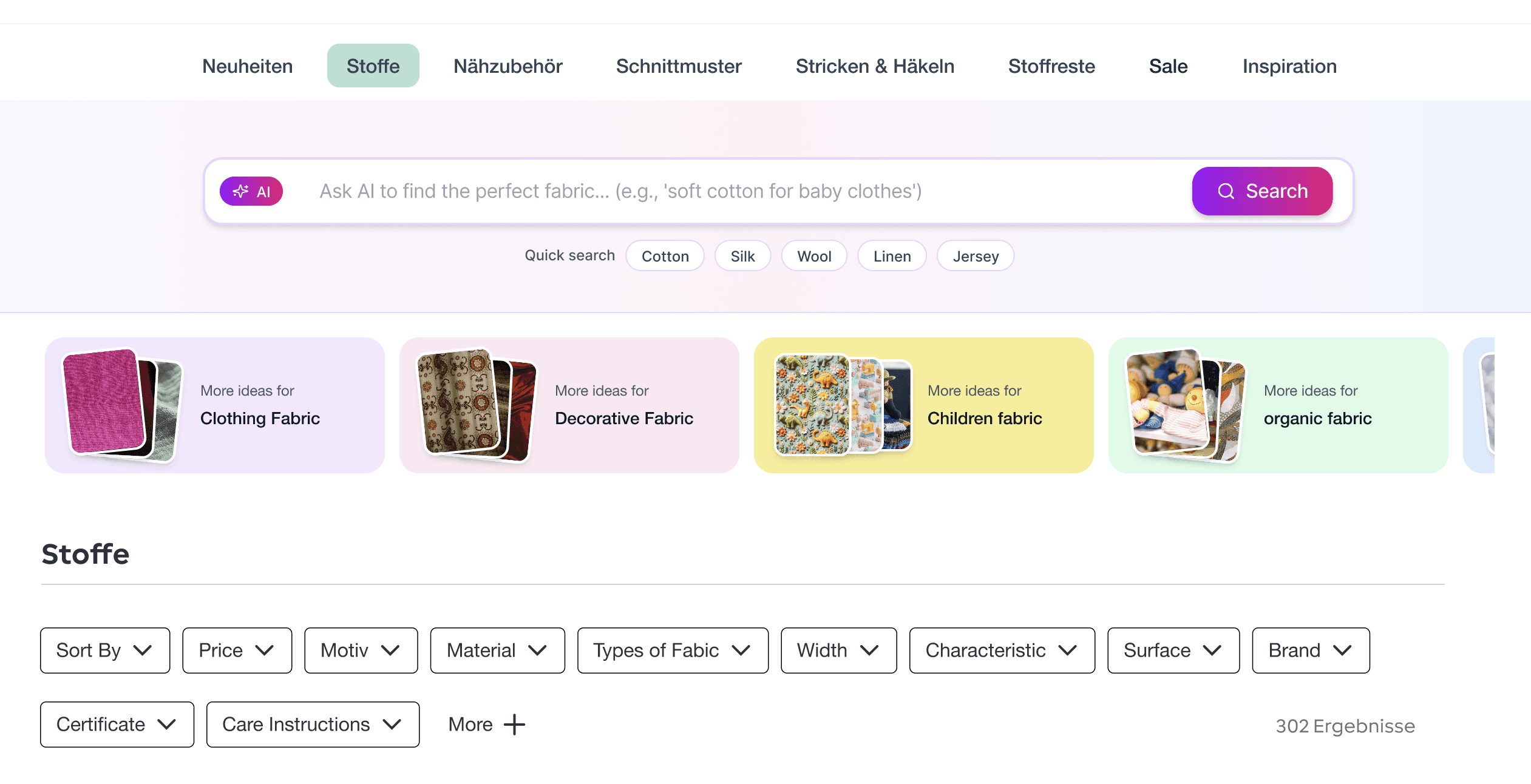
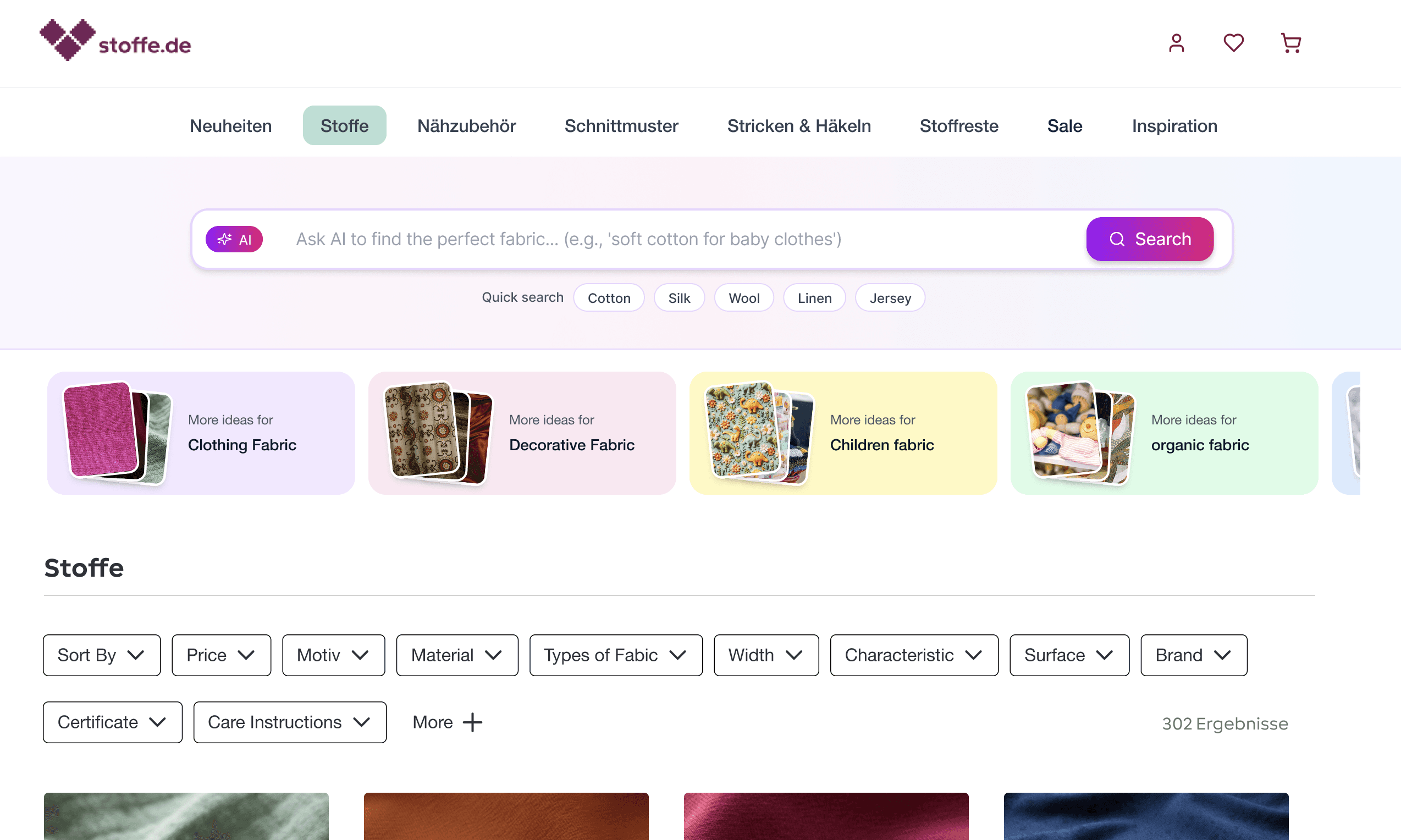
The redesigned product listing page reduced friction in navigation and filtering, making it easier for users to browse and compare a large assortment. A clearer structure and modern visual system improved scannability and consistency.
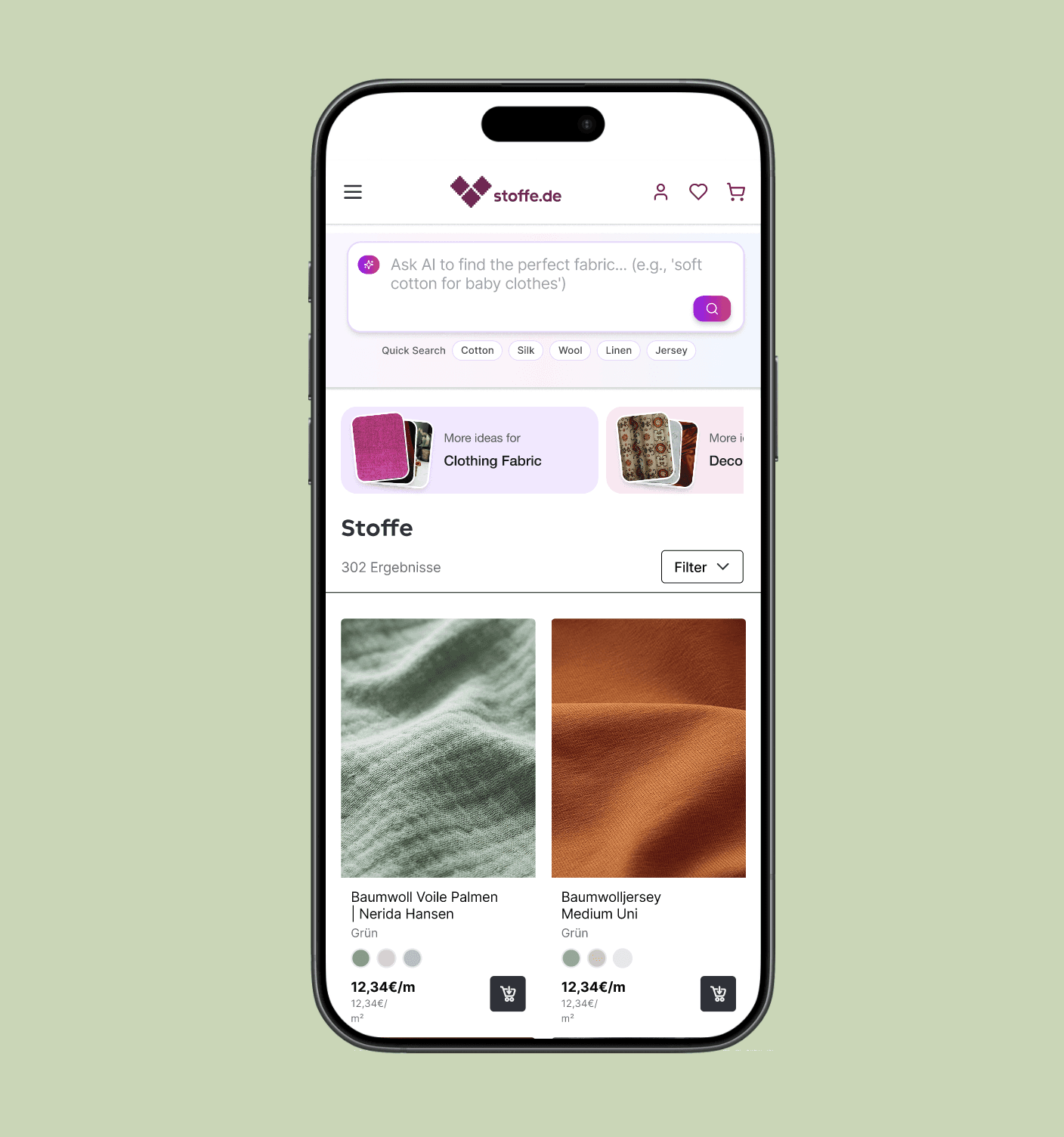
AI-driven search and guided recommendations enhanced discoverability by helping users find relevant products faster, creating a more intuitive and scalable browsing experience.
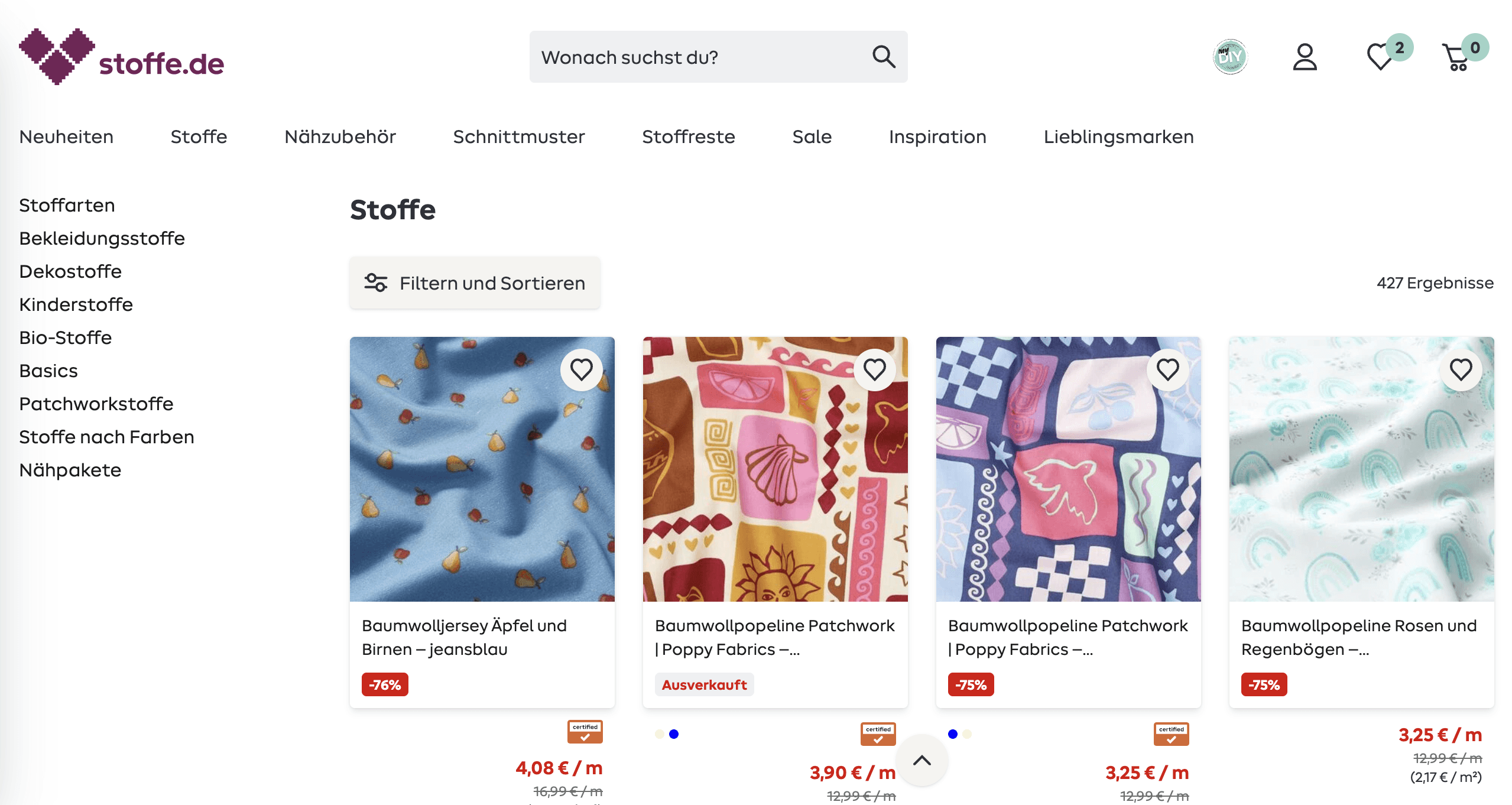
Process
Discovery & Insights
The process began by analyzing how users interacted with the product listing page and where friction occurred. User behavior, qualitative feedback, and competitive benchmarks revealed challenges in navigation, filtering, and product comparison across a large assortment.
Content Structure & Navigation
Insights from discovery informed a reorganization of categories and filters to better match user expectations. The information architecture was refined to reduce visual clutter and help users narrow down fabrics more efficiently.
AI Innovation
To support discovery within a massive product assortment, AI-driven search and recommendation features were introduced for the first time on the website. Intelligent suggestions helped users surface relevant categories and products faster, reducing reliance on manual filtering and improving overall findability.
Design Exploration & Prototyping
Early wireframes explored layout options, category placement, filter behavior, and AI-assisted entry points. These concepts evolved into high-fidelity, interactive prototypes with hover animations and motion cues to communicate interactivity and improve decision-making.
Validation & Iteration
Designs were tested with users to assess clarity, usability, and discoverability. Feedback informed iterative refinements, including simplified interactions and clearer AI guidance, improving confidence and efficiency while browsing.
Visual Language & Consistency
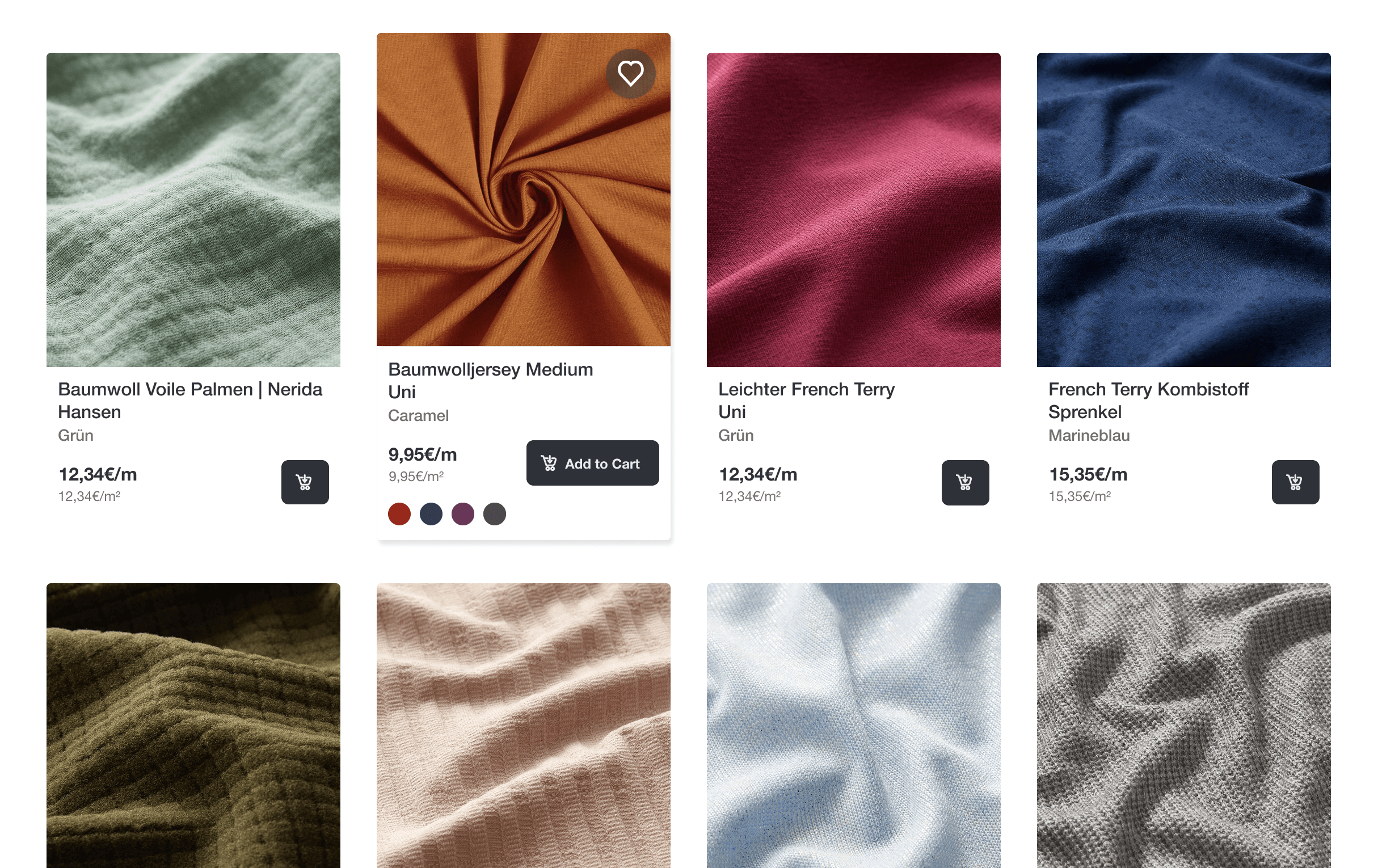
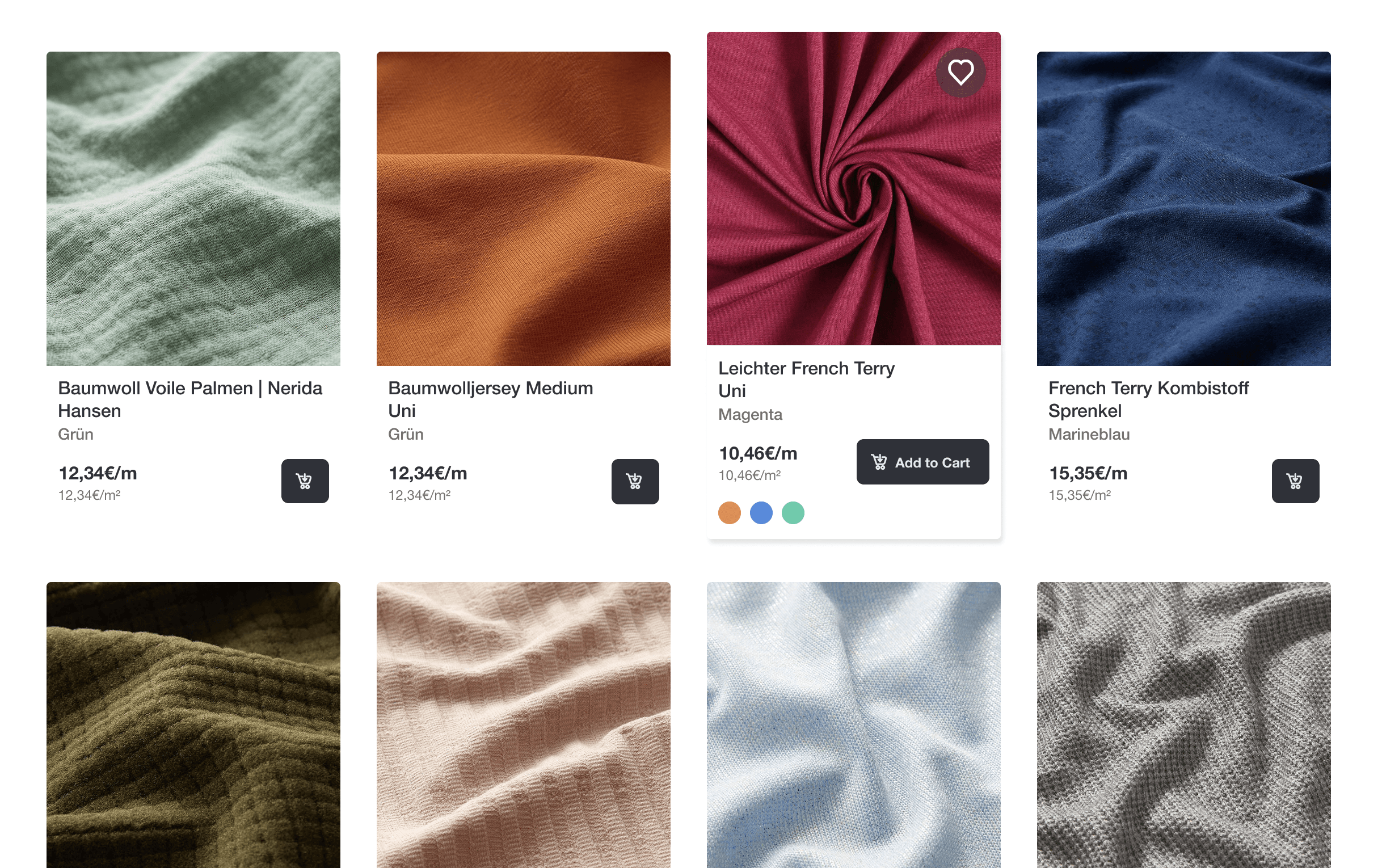
A modern visual direction was applied to enhance readability and hierarchy through typography, spacing, and subtle animations. Design guidelines ensured consistency across product cards, navigation, and AI-driven elements, creating a scalable foundation for future PLP improvements.
Design
AI Search & Cards
Product Listing
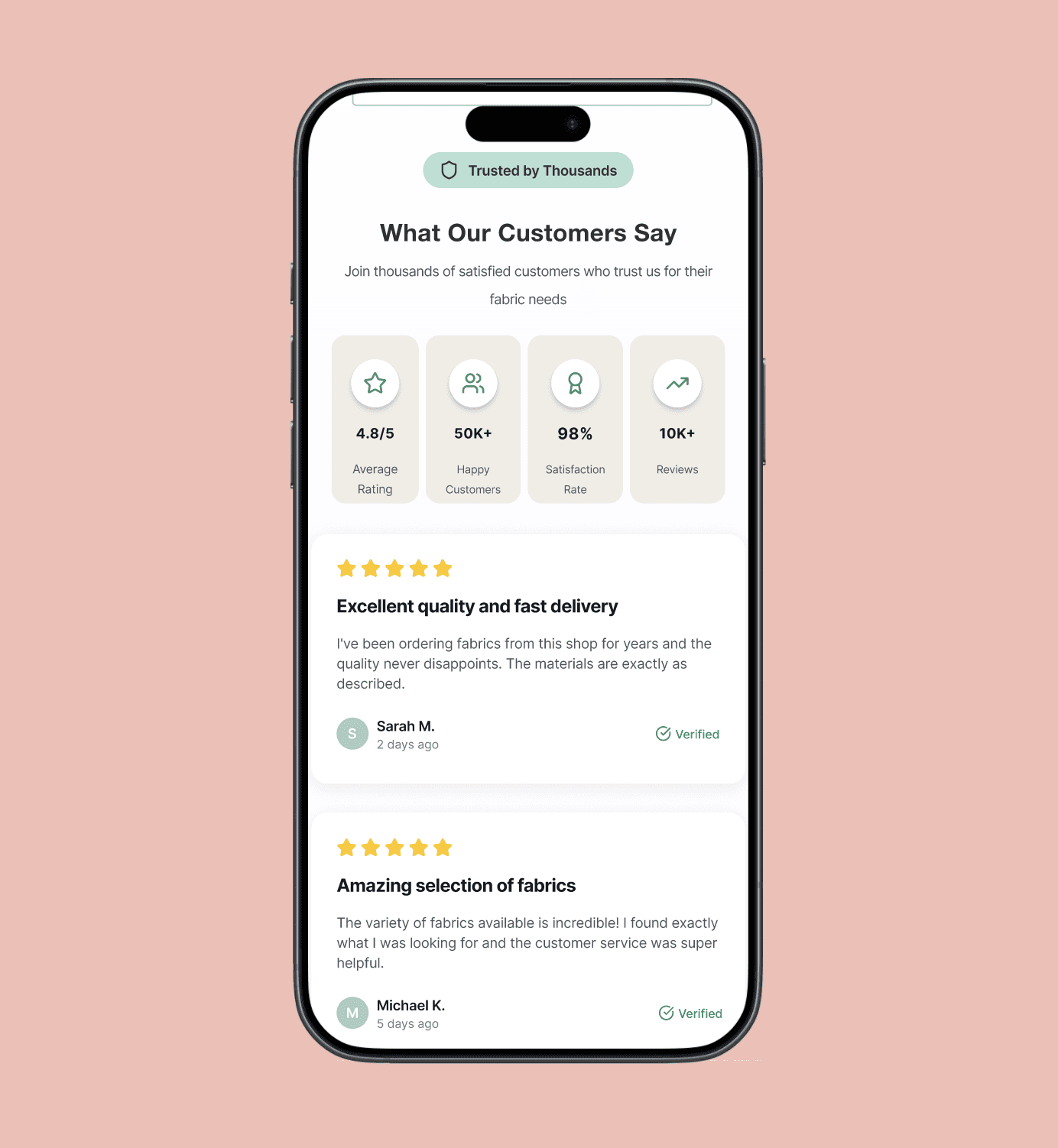
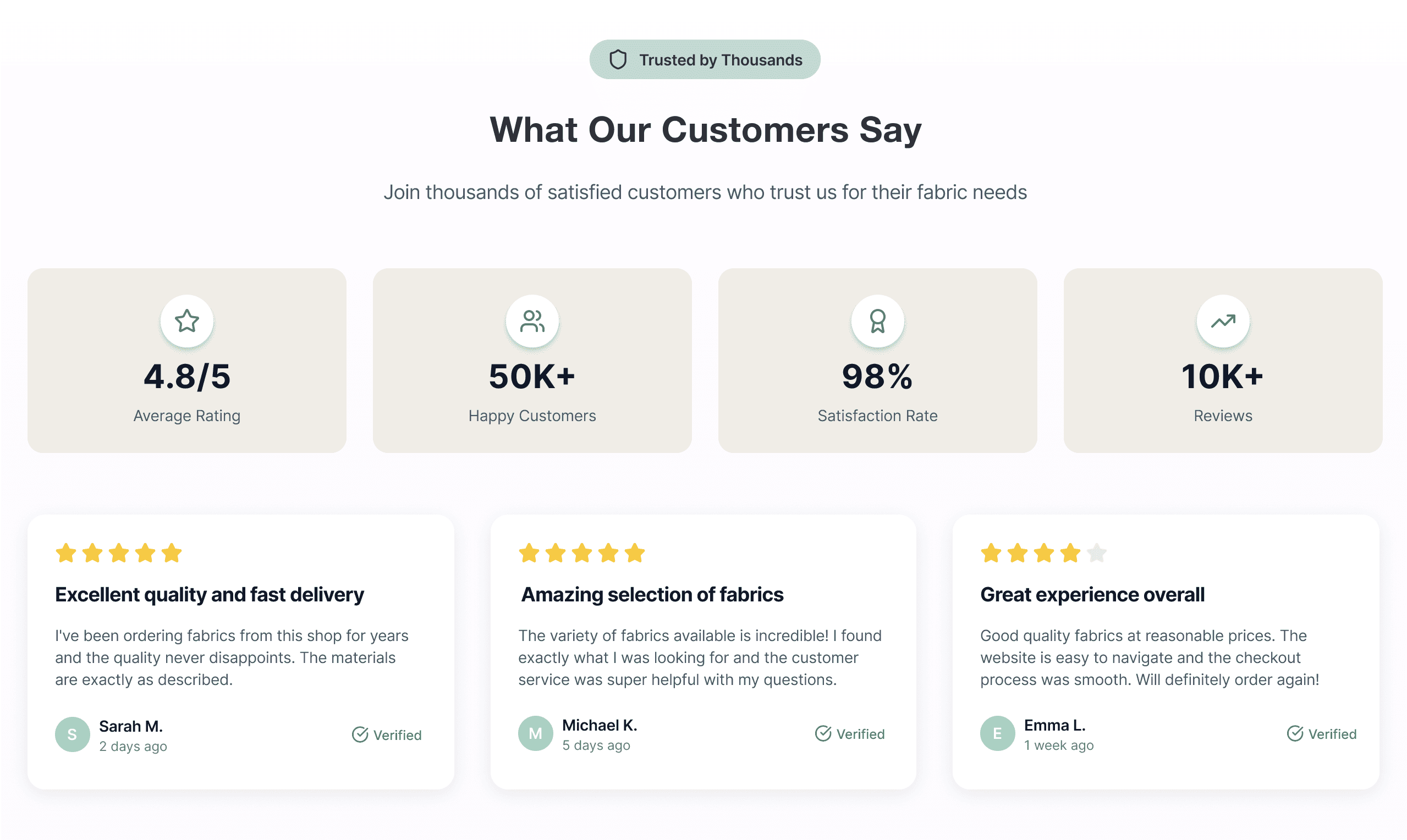
Reviews
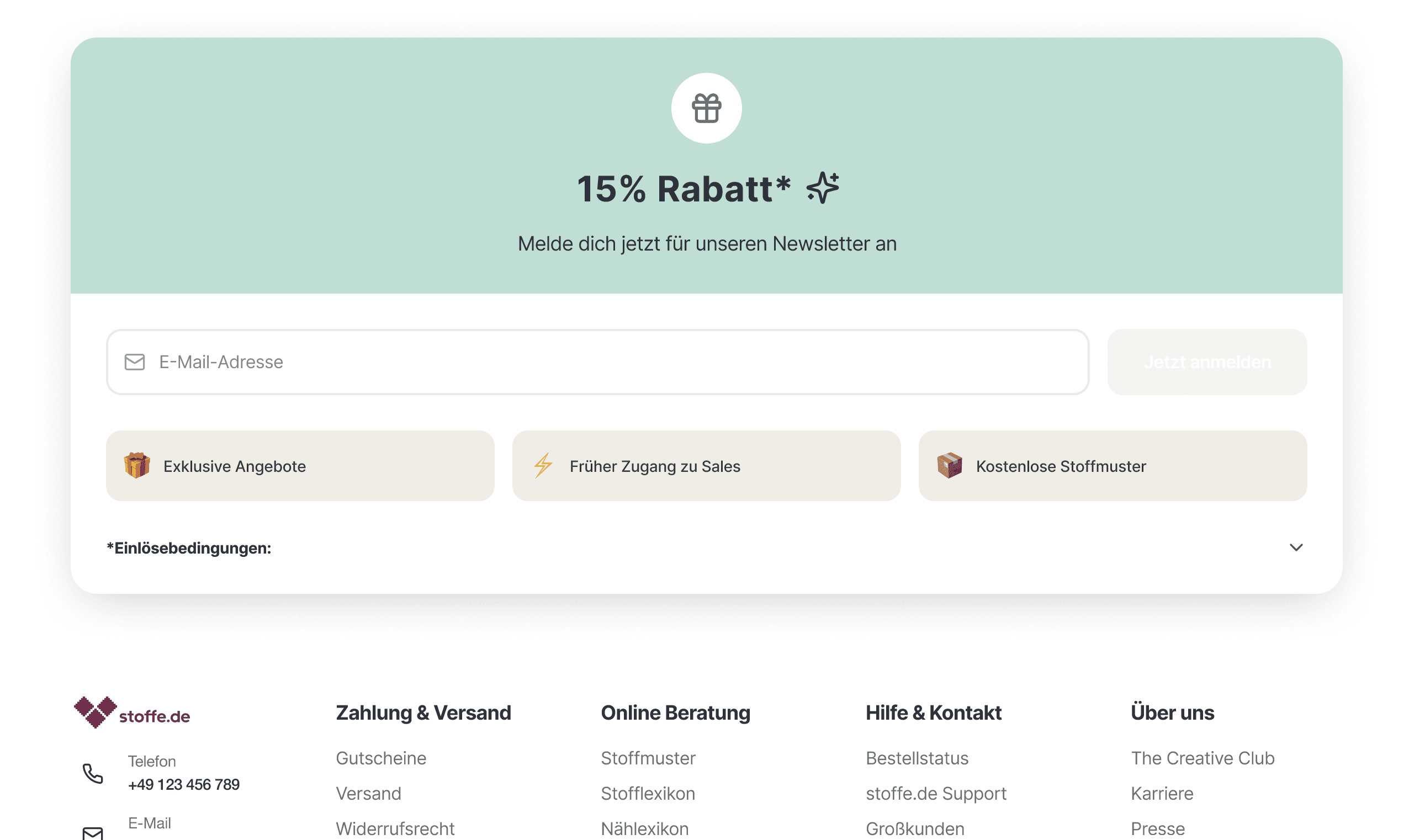
Newsletter Subscription
Final Thoughts
The final design elevates usability and discovery through a cleaner visual hierarchy, responsive layouts, and purposeful interactions. AI-powered search and guided exploration reduce friction across a large product catalog, enabling users to find what they need faster. Combined with subtle motion and consistent patterns, the experience feels intuitive, efficient, and built to scale.
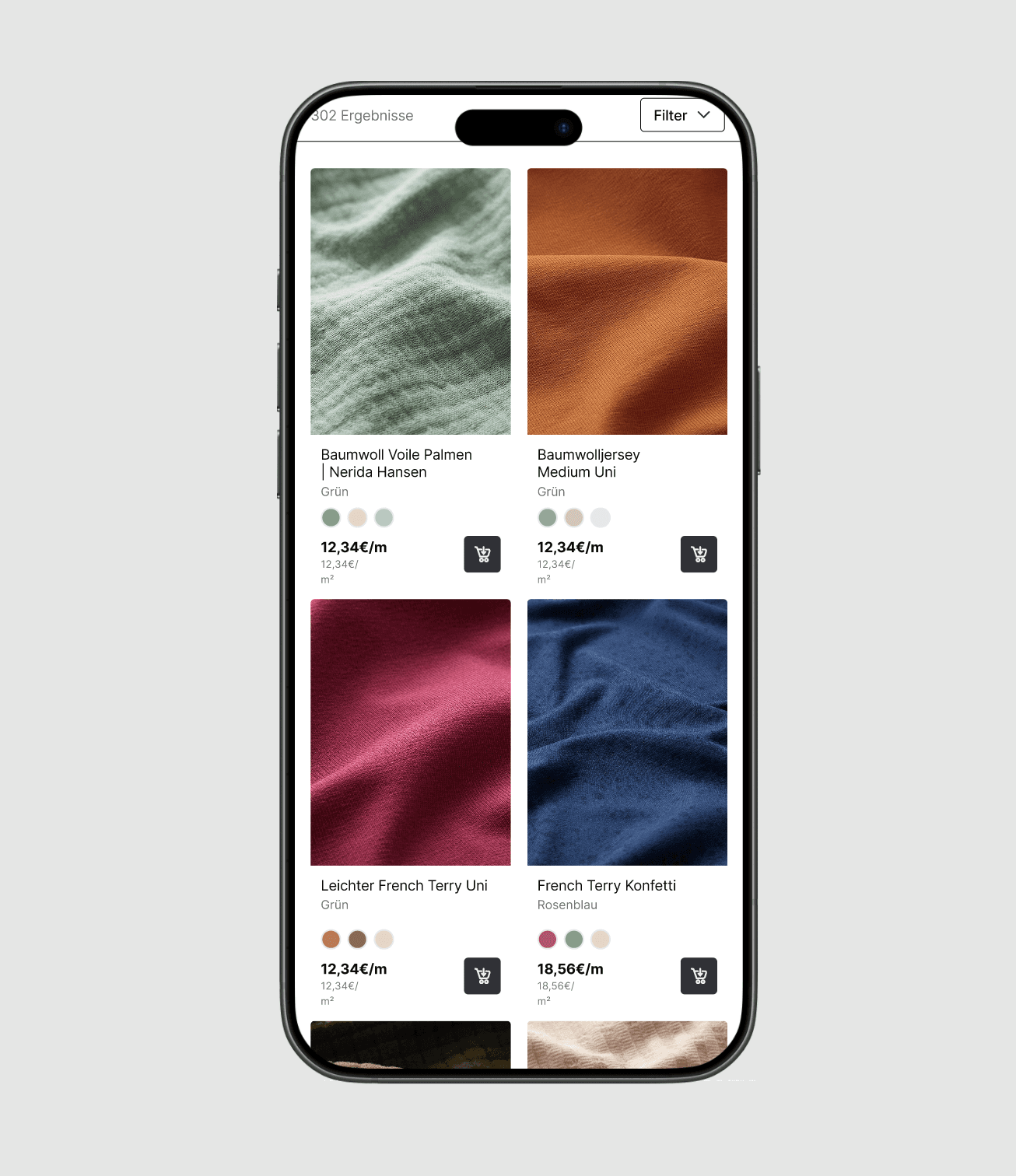
The design is rooted in clarity and restraint, using space, hierarchy, and motion to guide attention without distraction. Responsive layouts adapt seamlessly across devices, while interactions and AI-driven assistance remain supportive rather than intrusive. The result is a calm, intentional experience that prioritizes user confidence, discoverability, and long-term flexibility.